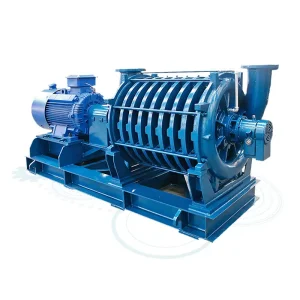
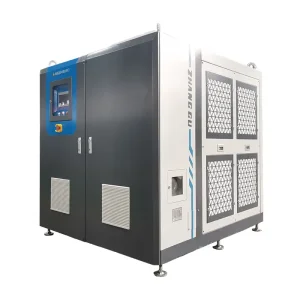
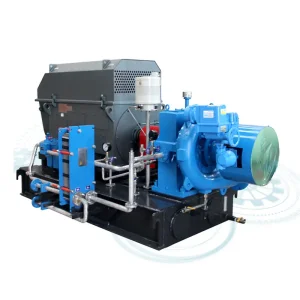
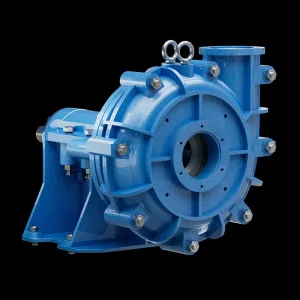
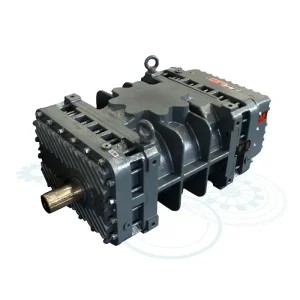
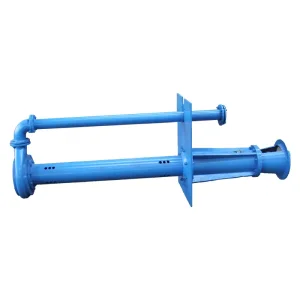
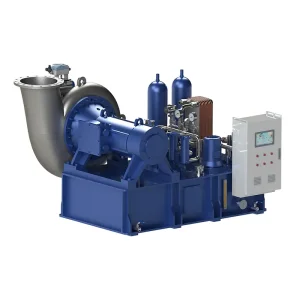
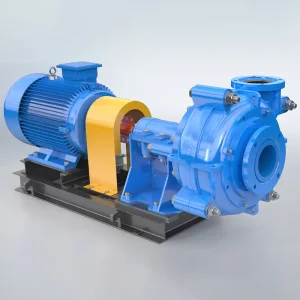
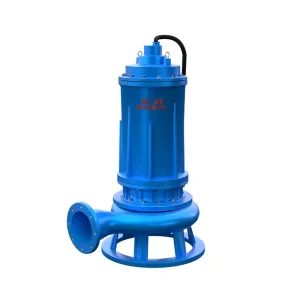
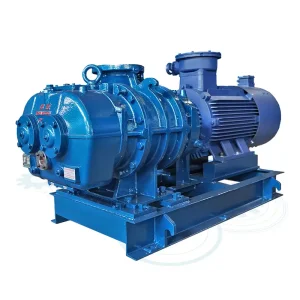
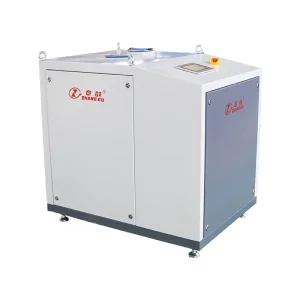
Premium selection from our globally trusted industrial portfolio, engineered for maximum durability under severe operations.
Analyzing key commercial segments, operational difficulties, and macro-economic demand drivers for advanced slurry relocation technology.
In modern industrial processes, the transport of highly abrasive, corrosive, and high-density slurries is a vital operating parameter. From deep mining operations and mineral processing plants to coal-fired power stations and wastewater treatment facilities, fluid relocation requires specialized hardware. Traditionally, vertical pit pumps or cantilever configurations were utilized; however, limitations in suction lift, priming difficulties, and mechanical vulnerability have accelerated the global adoption of submersible slurry pumps.
The global market for these specialized submersibles is experiencing rapid transformation. Factors such as intensifying regulatory frameworks surrounding mine tailings control, the expansion of municipal sewage networks, and structural infrastructure projects require reliable, low-maintenance, and highly resilient pumping systems. Modern suppliers are forced to deliver solutions that go beyond simple hydraulic efficiency—these systems must survive in severe wear environments where sand, rock, silt, and aggressive chemical ions conspire to cause mechanical breakdown within days of operational startup.
How cutting-edge wear coatings, high-chrome metallurgy, and advanced ceramic linings are redefining equipment lifespans.
How Submersible Slurry Pumps handle challenging environments worldwide, maintaining operation where other systems fail.
In deep underground mine sumps, water collects loaded with heavy drill cuttings, quartzite sand, and abrasive ore fragments. Here, vertical priming height is critical, and cavitation is a constant threat. Placing our high-performance submersible slurry pumps directly on the sump bed avoids priming issues. The pumps handle solid loading ratios exceeding 50% by weight and elevate the mixture directly to surface treatment installations.
Shipping channels, harbors, and municipal canals accumulate highly abrasive sand deposits, organic silt, and trash. Using barge-mounted submersible pump systems equipped with bottom agitators allows marine operators to vacuum mud and sand directly from the riverbed. This setup maximizes solid-to-liquid ratios and minimizes hydraulic energy waste compared to surface-mounted suction units.
Bottom ash handling systems in coal-fired power facilities operate under high-temperature conditions with highly abrasive fly ash particles. Slurry pumps operating in decanting tanks face chemical wear alongside intense physical erosion. The application of ceramic components and high-chrome hydraulic wear plates extends operating cycles from months to years.
Established in 1957, Shandong Zhangqiu Blower Co., Ltd. (formerly Shandong Zhangqiu Blower Works) has accumulated over 50 years of design, manufacturing, and diagnostic experience in air, gas, and heavy fluid mechanics. Through decades of dedication, we have established our position as an industry pioneer. ZCBC was the first Chinese blower manufacturer to build international branches, setting up two Sino-Japanese joint ventures and an overseas division in the United States.
In July 2011, ZCBC completed its listing on the Shenzhen Stock Exchange (Stock Code: 002598), laying a solid financial foundation for continuous material research and R&D expansion. In 2020, our parent group recorded operating revenues of 1.5 billion yuan. We operate 4 major manufacturing bases in Jiangsu Wuxi, Guangdong Dongguan, Hunan Chenzhou, and Gansu Jinchang, supported by 4 dedicated R&D facilities in Beijing, Shanghai, Shijiazhuang, and Wuxi.
Our core mission revolves around the principle: "Develop main business, pioneer new fields and innovate, cooperate to be a great company". Our day-to-day operations are driven by our motto, "Do the best", delivering premium Roots blowers, multi-stage centrifugal blowers, industrial slurry pumps, pneumatic conveying installations, electrical control assemblies, and MVR thermal evaporators worldwide.
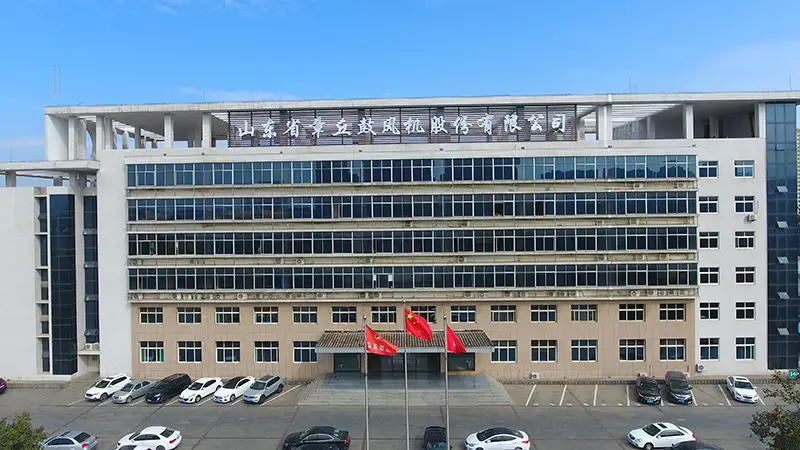
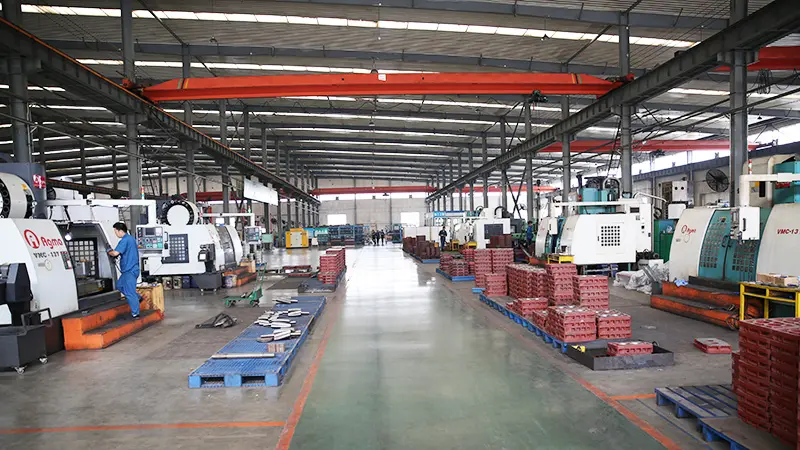
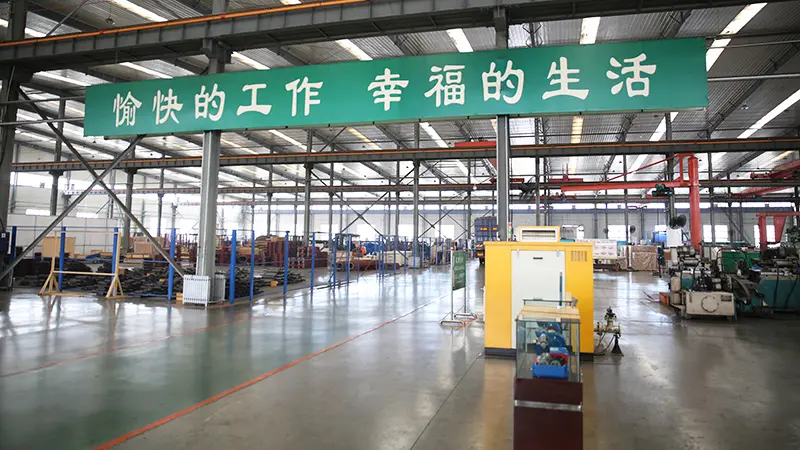
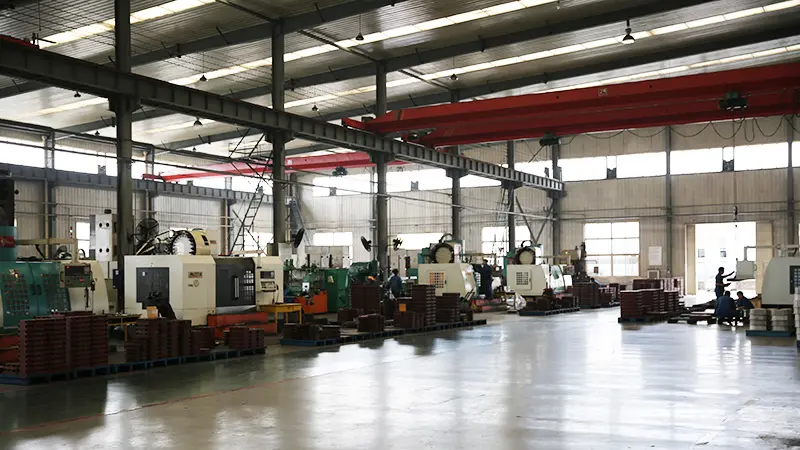
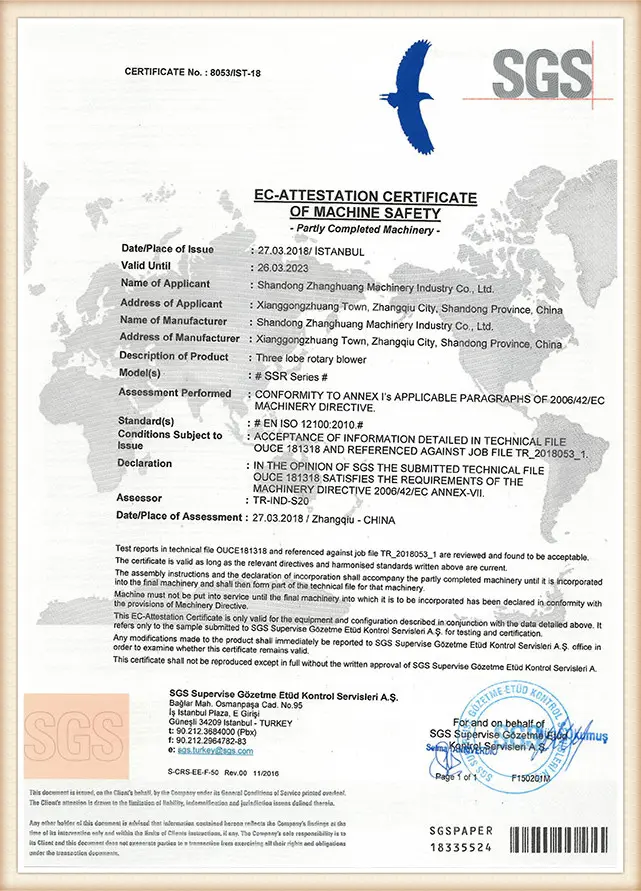
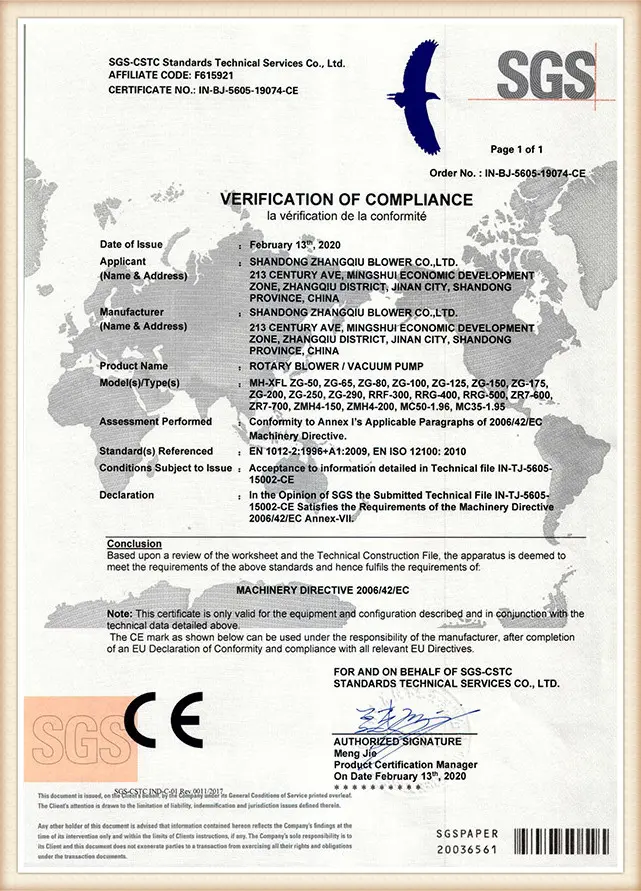
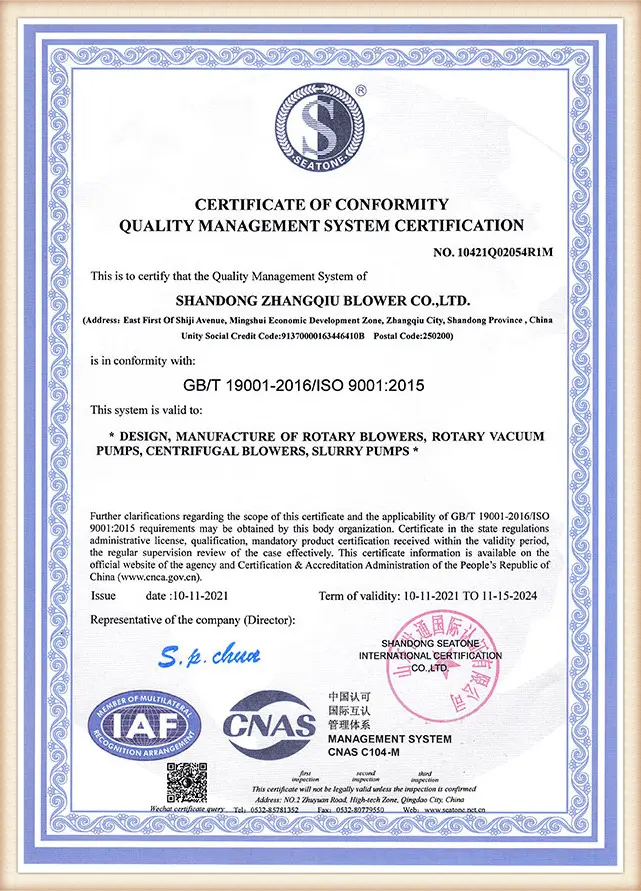
Unmatched quality management and state-of-the-art testing systems, certified by international validation authorities.
ZCBC is a leading member of the China General Machinery Industry Association and serves as the Vice President Unit of the Fan Branch. We are also a key drafting body for the national standards of Roots Blowers. Our manufacturing facilities are equipped with nearly 100 sets of advanced processing equipment. This machinery includes high-precision five-axis machining centers, CNC tool grinders, and three-coordinate measuring instruments imported from Germany and Japan. These tools are paired with ultrasonic flaw detectors, PLM life-cycle software, and computer-aided CAT test beds to ensure high manufacturing accuracy.
ZCBC is committed to maintaining strict quality standards across all production stages. Our facilities are certified under ISO9001 (Quality Management), ISO14001 (Environmental Management), ISO50001 (Energy Management), and ISO10012 (Measurement Management) standards. Our specialized pumps carry the Safety Mark for Mining Products, CE validation, and China Compulsory Certification (3C).
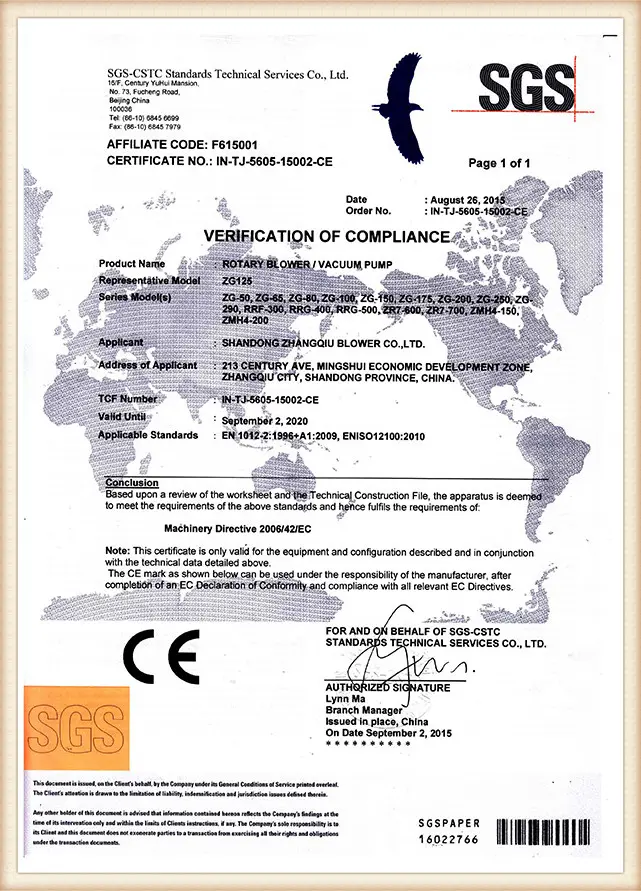
Detailed technical answers addressing common installation, operation, and maintenance challenges in slurry relocation systems.
Explore the remainder of our technical offerings designed to maintain high performance in demanding industrial facilities.
 Zhangqiu